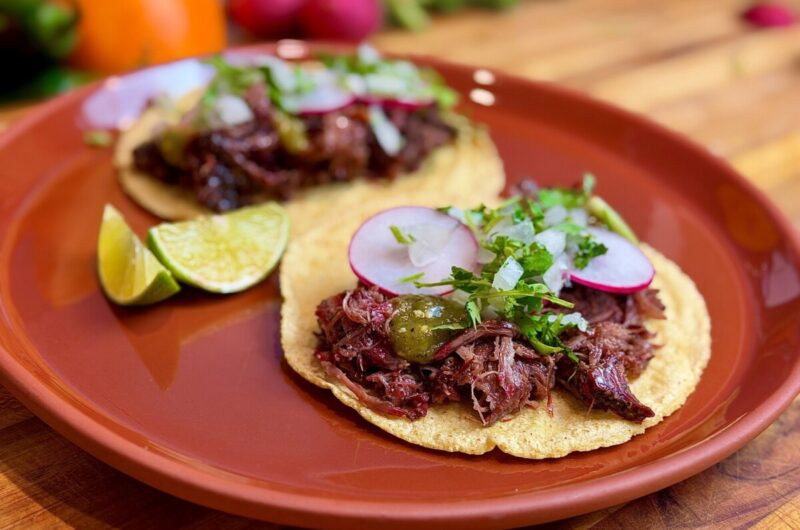
These Smoked Beef Cheek Tacos, or Tacos de Cachete, are packed with rich, smoky flavor and incredibly tender beef that practically melts in your mouth. The beef cheeks are slowly smoked until a beautiful bark develops, then submerged in beef tallow with citrus, garlic, and fresh herbs before being braised until fall-apart tender. Piled into warm corn tortillas and topped with a homemade roasted salsa verde, fresh radishes, onion, cilantro, and lime, these tacos are worth every minute of cooking.
What Are Tacos de Cachete?
Tacos de cachete are a traditional Mexican dish made with beef cheeks, a flavorful cut of meat that becomes incredibly tender when cooked low and slow.
Cachete translates to “cheek” in Spanish, and in Mexican cooking, beef cheeks are commonly used in barbacoa and other slow-cooked preparations.
Unlike more familiar cuts of beef, cheeks contain a significant amount of connective tissue. While that makes them tough when cooked quickly, it also makes them perfect for slow cooking. Given enough time, that connective tissue breaks down into gelatin, creating an incredibly rich, tender texture.
For this version, I’m combining two cooking techniques: smoking and confit-style braising in beef tallow.
The result is beef that’s smoky on the outside, rich and juicy on the inside, and tender enough to shred with almost no effort.
Start by Trimming the Beef Cheeks
Beef cheeks usually require a little preparation before cooking.
Depending on where you buy them, they can have a considerable amount of silver skin and tough connective tissue on the outside.
Use a sharp knife to carefully trim away the thick silver skin and any excessively hard pieces of fat. You don’t need to remove every bit of connective tissue, since much of it will break down during the long cooking process.
Once trimmed, pat the beef cheeks dry.
I like using yellow mustard as a binder before seasoning. It helps the seasoning adhere to the meat and doesn’t leave a noticeable mustard flavor after cooking.
Season generously with salt and black pepper, or use your favorite beef rub. Montreal steak seasoning is a great option because its coarse pepper, garlic, and spices complement the beef without overpowering its natural flavor.
Smoke the Beef Cheeks First
The first stage of cooking is all about developing smoke flavor and building a beautiful bark.
Set your smoker to 225°F and place the seasoned beef cheeks directly on the grates.
Let them smoke for approximately 3–4 hours, or until the outside develops a dark, flavorful crust.
You’re not trying to cook the cheeks until tender at this point. That happens during the next stage.
Instead, you’re building a layer of smoky flavor that will carry through the rest of the cooking process.
Once the bark looks good, remove the beef cheeks from the smoker and transfer them to a Dutch oven.
Braising in Beef Tallow
This is where the magic happens.
Instead of braising the beef cheeks in stock or water, I use rendered beef tallow.
Beef tallow is rendered beef fat, and cooking the cheeks submerged in it creates a rich, incredibly tender result. This technique is similar to confit, where meat is slowly cooked in fat at a low temperature.
Once the smoked beef cheeks are in the Dutch oven, pour in enough melted beef tallow to completely submerge them.
Then add the aromatics.
I squeeze in the juice of a fresh orange and add the peel directly to the pot. The citrus adds a subtle brightness that helps balance the richness of the beef.
A whole head of garlic, quartered white onion, fresh thyme, rosemary, cloves, and bay leaves bring additional layers of flavor.
As everything slowly cooks, the aromatics infuse the tallow while the beef becomes increasingly tender.
Low and Slow Is the Secret
Once the beef cheeks are submerged in the tallow and surrounded by aromatics, cover the Dutch oven and transfer it to a 205°F oven.
Let the beef cook for approximately 4–6 hours, or until it’s extremely tender.
The exact cooking time will depend on the size of the cheeks, so don’t rely on the clock alone.
You’re looking for beef that offers almost no resistance when pierced with a fork or probe.
The connective tissue should have broken down completely, leaving meat that’s rich, juicy, and easy to shred.
Because the oven temperature is so low, this process takes patience. But that’s exactly what makes the finished beef so good.
Make a Roasted Salsa Verde
While the beef cheeks are slowly braising, it’s the perfect time to make the salsa.
For these tacos, I like a roasted salsa verde with tomatillos, jalapeño, poblano, onion, and garlic.
Instead of boiling the vegetables, I roast them under the broiler until they develop a nice char.
This brings out their natural sweetness while adding a smoky, roasted flavor that works perfectly with the beef.
Once the vegetables are charred and slightly cooled, everything goes into the blender along with fresh cilantro, Mexican oregano, lime juice, and a little chicken bouillon.
Don’t forget to pour in any juices that collected on the baking sheet. Those juices are packed with flavor.
Blend until smooth, then taste and adjust the salt.
The finished salsa should be bright, tangy, slightly spicy, and full of roasted chile flavor.
Shred the Beef
Once the beef cheeks are tender, carefully remove them from the tallow and transfer them to a large bowl.
Let them cool just enough to handle, then shred the meat using two forks or your hands.
You shouldn’t need much effort. Properly cooked beef cheeks will practically fall apart on their own.
Taste the shredded beef and add a little salt if needed.
The meat should be incredibly rich and juicy, with a deep smoky flavor from the first stage of cooking and subtle notes of citrus and aromatics from the tallow.
Keep the Toppings Simple
With beef this flavorful, you don’t need a lot of toppings.
Warm corn tortillas are the perfect base.
Pile on a generous portion of shredded beef cheek, followed by a spoonful of roasted salsa verde.
I like finishing mine with thinly sliced radishes, diced white onion, fresh cilantro, and a squeeze of lime.
The radishes add crunch, the onion and cilantro bring freshness, and the lime cuts through the richness of the beef.
The roasted salsa verde ties everything together with its bright acidity and smoky chile flavor.
A Taco Worth the Wait
These Smoked Beef Cheek Tacos take time, but the process is surprisingly straightforward.
Smoking develops the bark and deep flavor, while the slow braise in beef tallow transforms the cheeks into some of the most tender beef you’ll ever eat.
And when you pair that rich, smoky meat with a bright roasted salsa verde and fresh toppings, everything balances perfectly.
They’re great for a weekend cookout, feeding a crowd, or anytime you want to take taco night to another level.
Make sure you have plenty of tortillas ready.
These won’t last long.
Smoked Beef Cheek Tacos (Tacos de Cachete)
Course: MainCuisine: MexicanDifficulty: intermediate4
servings30
minutes40
minutes300
kcalIngredients
4 lbs beef cheeks, trimmed
2 tablespoons yellow mustard
2 tablespoons coarse black pepper
1 tablespoon kosher salt, or to taste
Montreal steak seasoning, optional substitute for salt and pepper
3–5 lbs rendered beef tallow, or enough to completely submerge the beef
1 orange, halved
1 whole head of garlic, sliced in half horizontally
1 large white onion, quartered
4 sprigs fresh thyme
2 sprigs fresh rosemary
4 whole cloves
2 bay leaves
- For the Roasted Salsa Verde
1½ lbs tomatillos, husked and rinsed
2 jalapeños, stems removed
1 poblano pepper, stem and seeds removed
½ large white onion
4 garlic cloves, unpeeled
1 teaspoon Knorr chicken bouillon powder
½ teaspoon Mexican oregano
½ cup fresh cilantro
Juice of 1 lime
Kosher salt, to taste
- For the Tacos
16–20 corn tortillas
½ white onion, finely diced
½ cup fresh cilantro, chopped
4–6 radishes, thinly sliced
Lime wedges
Roasted salsa verde
Directions
- Trim the beef cheeks. Using a sharp knife, remove the thick silver skin and any tough, excess connective tissue from the outside of the beef cheeks. Pat dry with paper towels.
- Apply the binder. Spread a thin layer of yellow mustard over the beef cheeks, making sure all sides are evenly coated.
- Season the beef. Generously season with kosher salt and coarse black pepper, or use your favorite beef rub. Montreal steak seasoning works especially well.
- Smoke the beef cheeks. Preheat your smoker to 225°F.
Place the seasoned beef cheeks directly on the smoker grates and smoke for approximately 3–4 hours, or until a dark, flavorful bark develops on the outside.
The beef does not need to be tender at this stage. - Transfer to a Dutch oven. Remove the beef cheeks from the smoker and arrange them inside a large Dutch oven.
- Add the beef tallow. Melt the beef tallow until completely liquid, then carefully pour it into the Dutch oven until the beef cheeks are fully submerged.
- Add the aromatics. Squeeze the juice of the orange into the pot, then add the orange halves and peel.
Add the halved head of garlic, quartered white onion, fresh thyme, rosemary, whole cloves, and bay leaves.
Make sure the aromatics are nestled into the tallow around the beef. - Braise low and slow. Cover the Dutch oven with a tight-fitting lid and place it in a preheated 205°F oven.
Cook for approximately 4–6 hours, or until the beef cheeks are extremely tender and easily pierced with a fork or temperature probe.
Check the beef toward the end of cooking. If it still feels firm, continue cooking until the connective tissue has completely softened. - Prepare the Roasted Salsa Verde
- Prepare the vegetables. While the beef is braising, arrange the cleaned tomatillos, jalapeños, poblano, white onion, and unpeeled garlic cloves on a baking sheet.
- Broil the vegetables. Position an oven rack approximately 6 inches below the broiler.
Broil the vegetables for about 8–12 minutes, turning halfway through, until the tomatillos have softened and the vegetables develop charred spots.
Remove the baking sheet from the oven and allow everything to cool slightly. - Blend the salsa. Peel the roasted garlic and add it to a blender along with the tomatillos, jalapeños, poblano, and onion.
Pour in any juices collected on the baking sheet.
Add the chicken bouillon, Mexican oregano, cilantro, lime juice, and a pinch of salt.
Blend until smooth. - Adjust the seasoning. Taste the salsa and add more salt or lime juice if needed. Set aside until ready to serve.
- Shred the Beef
- Remove the beef cheeks. Once the beef is completely tender, carefully lift the cheeks out of the hot tallow and transfer them to a large bowl.
Allow the beef to cool slightly. - Shred the beef. Using two forks or your hands, shred the beef cheeks into bite-sized pieces.
Taste and season with additional salt if needed. - Assemble the Tacos
- Warm the tortillas. Heat the corn tortillas on a hot comal or skillet until soft and pliable with a few lightly charred spots.
- Build the tacos. Add a generous portion of shredded beef cheek to each warm tortilla.
Spoon the roasted salsa verde over the beef.
Top with thinly sliced radishes, diced white onion, and chopped fresh cilantro. - Finish and serve. Squeeze fresh lime juice over the tacos and serve immediately with extra salsa verde on the side.
Tips for the Best Smoked Beef Cheek Tacos
Trim the cheeks properly. Removing thick silver skin before cooking gives the finished beef a better texture. You don’t need to remove all the connective tissue, since much of it will break down during the braise.
Focus on the bark. The first stage of smoking is about developing color and flavor, not tenderness. Once a nice dark bark forms, the beef is ready for the tallow.
Use enough beef tallow. The cheeks should be completely submerged during the braise. The amount needed depends on the size of your Dutch oven, so using a smaller pot that fits the beef snugly can help reduce the amount of tallow required.
Be patient with the braise. At 205°F, the beef may take longer than expected to become tender. Use the cooking time as a guide and judge doneness by texture rather than time alone.
Don’t burn the salsa vegetables. You want a nice char, but avoid completely blackening the vegetables. A little char adds smoky flavor, while too much can make the salsa bitter.
Save the beef tallow. Once cooled, the tallow can be strained to remove the solids. Refrigerate promptly and store safely for future cooking. Because it has been used to cook beef and aromatics, treat it as a perishable cooking fat.
Make the beef ahead. The smoked and braised beef cheeks can be prepared in advance and gently reheated before serving. This makes the tacos especially convenient when cooking for a crowd.